
|
Getting your Trinity Audio player ready...
|
We tend to think of a fortress as a structure made of cold stone, surrounded by a moat, with archers stationed in high towers. However, the modern version of a fortress looks nothing like a medieval castle. It looks exactly like your house, or at least it should, provided you have applied the right layers of strategy, technology, and physical reinforcement. We are going to analyze exactly what makes a home a hard target today, moving beyond simple locks and into the psychology of deterrence and the physics of resistance. Read this analysis to the end to discover how a few screws can be the difference between a break-in and a failed attempt, and find out why your rose bushes might be your first line of defense.
What is the Modern Fortress?
The Modern Fortress is not a single product you buy; it is a philosophy of layers. It represents a shift from reactive security to proactive deterrence. It is a cohesive ecosystem where your landscaping, your physical hardware, and your digital habits work in unison.
Think of it as a living organism rather than a passive box of bricks. It is aware of its surroundings through sensors, it communicates boundaries through design, and it resists force through hardened materials. The goal is simple: to create enough friction and risk that a potential intruder decides to move on to an easier target. It is about controlling the environment so that you are the one setting the rules of engagement, not the threat.
The Architecture of Defense
Security starts long before anyone touches your front door handle. It begins at the curb. The way your property is designed and maintained sends a clear message to anyone watching. So, we will explore how architecture and landscaping act as a silent language that either invites trouble or warns it away.
Crime Prevention Through Environmental Design
There is a fascinating concept used by urban planners called CPTED, or Crime Prevention Through Environmental Design. It sounds complex, yet the principle is incredibly simple. You want to use the environment to discourage bad behavior. Think of it like steering a river; you use natural barriers to guide flow where you want it.
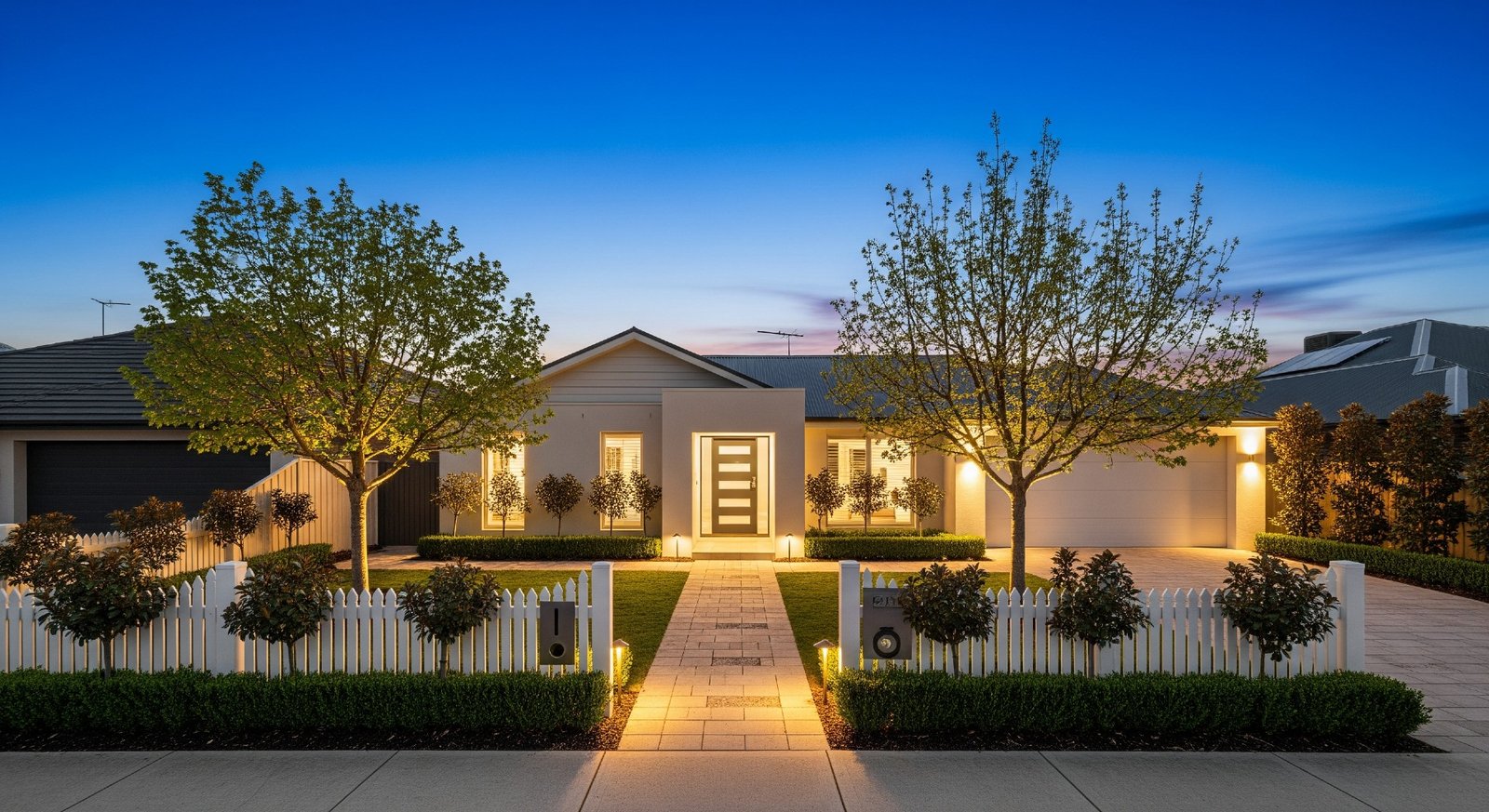
Natural Surveillance is the first pillar. Criminals hate being seen. If your driveway is hidden by overgrown hedges, you are providing a private workspace for a burglar. Trim your bushes to waist height and limb up your trees to head height. This creates a clear field of view so that neighbors and passersby can see your front door.
Territorial Reinforcement is next. This involves creating a clear distinction between public space and your private space. A low picket fence or a change in pavement texture from the sidewalk to your walk tells the subconscious mind, “You are crossing a boundary now.” It removes the excuse of accidental trespassing.
The Power of Illumination
Darkness is the enemy of security. Well, more specifically, uneven darkness is the enemy. Blasting a single floodlight that creates deep, pitch-black shadows is actually counterproductive because those shadows make excellent hiding spots. Instead, you want even, ambient lighting that washes the perimeter of your home.
Motion-sensor lights are effective, but consider low-voltage landscape lighting that stays on all night. It removes the cloak of invisibility. Have you ever walked past a house that was completely dark and felt how uninviting it was? A criminal feels the opposite; they feel invited.
Hardening the Physical Shell
Now that we have addressed the psychological and visual layers, we must look at the physical barriers. If deterrence fails, the physical shell of your home must withstand force. This is where most standard homes fail simply because construction standards prioritize cost over security.
The Doorway Vulnerability
The front door is the most common entry point, which seems bold, yet it happens constantly. Most residential doors are installed with screws that are barely an inch long. A strong kick can tear the strike plate right out of the soft wood frame.
Reinforcing the Strike Plate
Here is a fact that might surprise you. You can increase your door’s kick-in resistance by massive amounts for less than ten dollars. Replace the standard screws in your strike plate—the metal piece on the frame where the bolt enters—with three-inch hardened steel screws. These long screws bite into the structural stud behind the door frame, rather than just the trim.
The Door Material
Hollow core doors are for bedrooms, not for the exterior. Ensure your entry doors are solid wood or reinforced steel. When you knock on it, it should hurt your knuckles. If it sounds like a drum, it is a liability.
Glass: The Transparent Weakness
Windows are wonderful for light, but terrible for security. You can have a bank-vault door, but if there is a fragile pane of glass right next to it, the lock is useless. A thief breaks the glass, reaches in, and unlocks the door.
Security Film Technology
You don’t need bars on your windows to be safe. Security window film is a thick, transparent layer that bonds to the glass. If someone tries to smash it, the glass shatters but stays held in place by the film, much like a car windshield. It turns a two-second entry into a noisy, exhausting ordeal for an intruder. Most criminals will give up after the second hit doesn’t break through.
The Digital Perimeter
We live in a digital age, so our fortress needs a digital nervous system. This layer detects threats that the physical walls cannot feel and alerts you before a breach occurs.
Smart Integration vs. Privacy
This is the paradox of the modern fortress. We invite microphones and cameras into our homes to protect us, but they also gather data. The key is local control.
Look for camera systems that record to a local hard drive rather than sending everything to the cloud. You want the benefit of seeing who is at the door without broadcasting your daily routine to a server halfway across the world.
Sensors and Automation
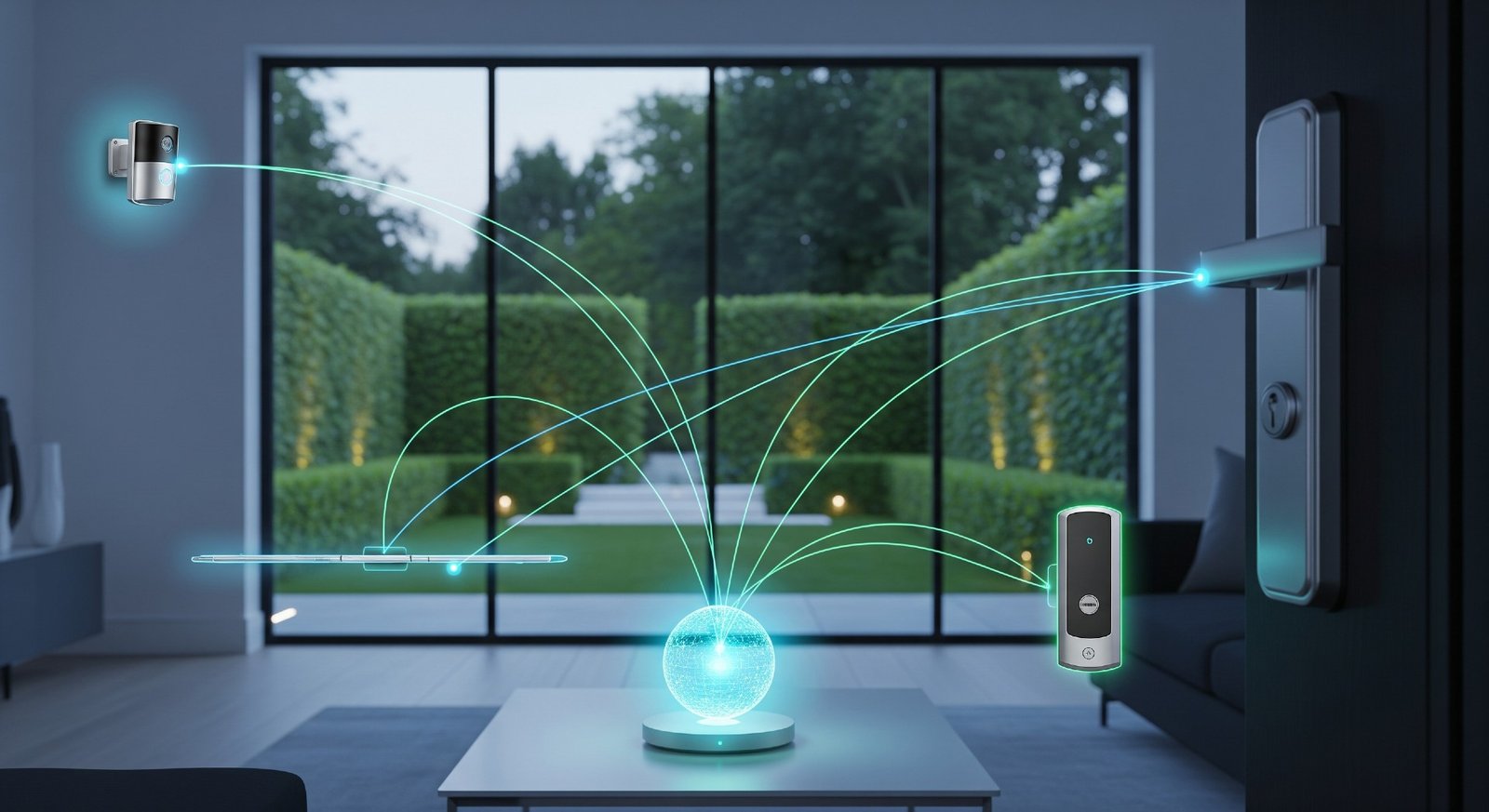
Think of sensors as your scouts. Door contact sensors, glass break detectors, and motion sensors create a web of awareness. Automation can turn this into active defense. For example, you can program your system so that if a motion sensor in the backyard is triggered, the kitchen lights turn on instantly. It simulates a person waking up and checking the noise.
The Fortress State of Mind
Building a Modern Fortress is not about living in fear or sealing yourself in a bunker. It is about taking control of your environment. By layering CPTED principles with hardened physical entry points and smart detection, you create a home that is unattractive to criminals and safe for your family.
The goal is peace of mind. When you lock that door at night, you want to know that the bolt is holding onto a structural stud, the glass is reinforced, and the lights are keeping watch.
What is the weakest link in your home right now? Is it the short screws in your door frame or the dark corner of the yard? Leave a comment below and let us know what you plan to upgrade first.